
The regulatory landscape for wastewater monitoring in Europe continues to evolve under the EU Industrial Emissions Directive and the associated BAT Reference Documents. These frameworks increasingly emphasize the adoption of Total Organic Carbon (TOC) as a primary parameter for assessing organic pollution in industrial effluents.
Why TOC is gaining regulatory preference over COD?
The transition from Chemical Oxygen Demand (COD) to TOC is driven by several technical and regulatory advantages:
- Standardization across Europe
TOC measurements are governed by the harmonized EN 1484 standard, ensuring consistency and comparability across laboratories and jurisdictions. - Improved safety and sustainability
Unlike COD, TOC analysis does not rely on hazardous reagents such as dichromate or mercury salts, aligning with stricter environmental and safety objectives. - Enhanced analytical performance
TOC enables faster analysis, reduced sample preparation, and compatibility with online/continuous monitoring systems, supporting real-time process control. - Data continuity through correlation
Established correlation factors allow historical COD datasets to remain relevant, enabling a smooth transition without loss of trend data.
Expanding regulatory scope across industries
Initially emphasized in sectors such as:
- Pulp, paper, and board production
- Oil refining
TOC monitoring is now being extended to:
- Chemical manufacturing and processing
- Waste treatment and recycling facilities
- Wood-based panel production
- Centralized industrial wastewater treatment systems
As BAT conclusions are progressively transposed into national legislation, TOC is becoming a central compliance parameter rather than an optional metric.
Practical implementation: tools and technologies
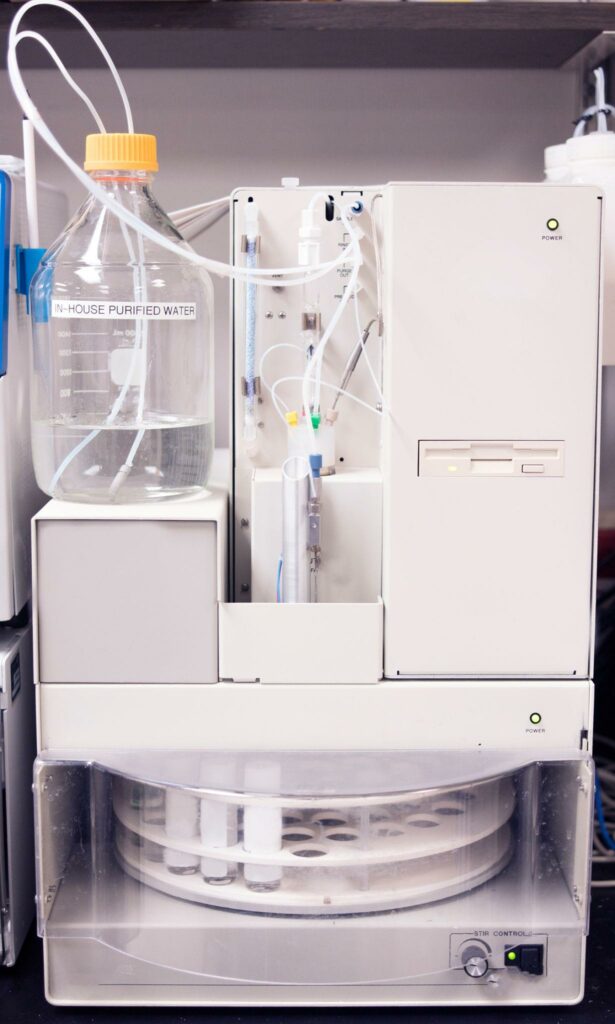
To meet these evolving requirements, laboratories and industrial operators are increasingly adopting:
- High-sensitivity TOC analyzers (ppb-level detection)
- Online TOC monitoring systems for continuous control of wastewater streams
- Automated sampling and calibration systems to ensure compliance and data integrity
- Data management platforms compliant with 21 CFR Part 11 and ALCOA+ principles
These tools support:
– Real-time decision making
– Early detection of process deviations
– Reduced risk of non-compliance
– Full traceability during audits
Regulatory outlook
The integration of BAT conclusions under the IED framework signals a clear direction:
TOC is transitioning from a complementary parameter to a regulatory standard
Organizations that proactively implement TOC-based monitoring strategies will be better positioned to:
- Ensure compliance
- Improve environmental performance
- Optimize operational efficiency
Learn more about the directive:
https://eur-lex.europa.eu/eli/dir/2010/75/oj
TOC Standards by TOC analyzer brand
Check out all TOC standards and the devices: